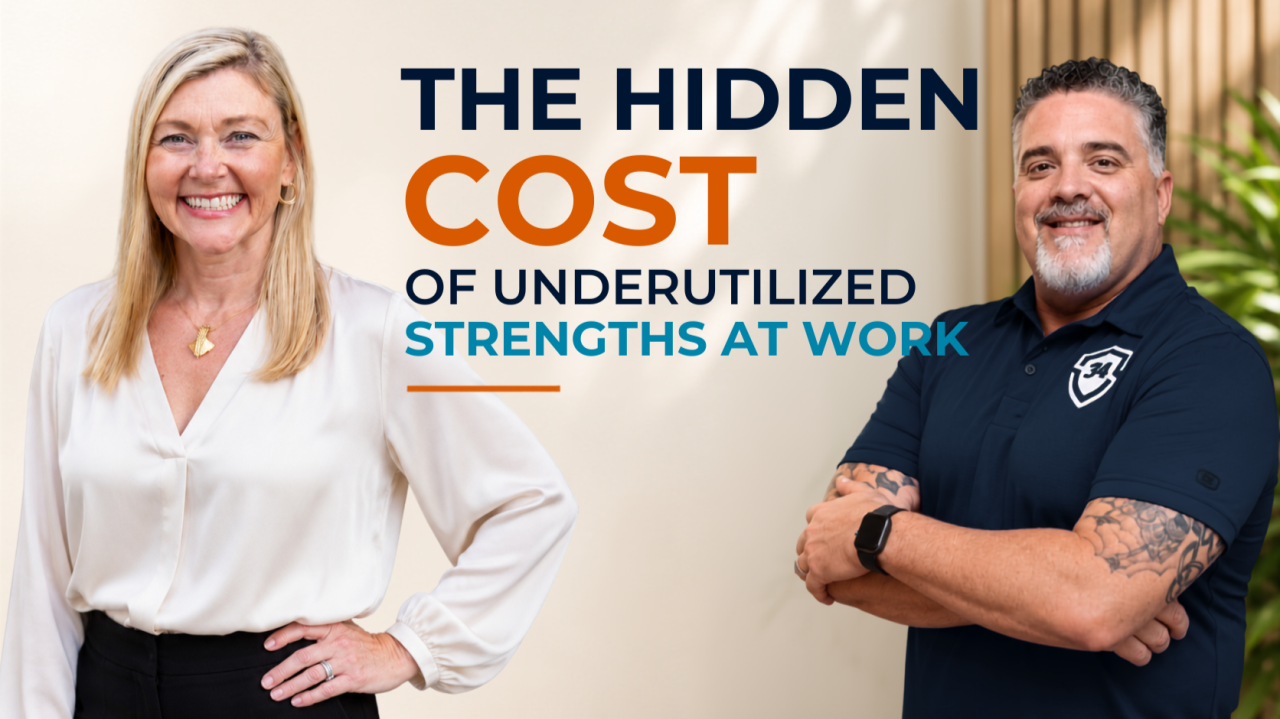
The Hidden Cost of Underutilized Strengths at Work

Most organizations spend a tremendous amount of time trying to improve performance. They invest in hiring, training, technology, processes, and productivity initiatives.
Yet one of the biggest performance opportunities often goes unnoticed: employees who are capable of contributing far more than their current role allows.
In a recent episode of You've Got People Problems, Melissa Ortiz sat down with Brandon Miller, CEO of 34 Strong, to discuss the hidden cost of underutilized strengths and why helping employees use more of what they naturally do best may be one of the most overlooked drivers of engagement, retention, and performance.
Together, they explored how strengths influence workplace success, why so many organizations leave talent untapped, and what leaders can do to create environments where employees thrive.
Underutilized Strengths Create Invisible Waste
Most leaders assume that if someone is performing well, everything is fine. But performance and fulfillment are not always the same thing.
Employees can be competent, productive, and reliable while still leaving a significant portion of their potential unused.
As Miller explained, organizations often hire someone to perform a specific job but fail to fully understand everything that individual brings to the table. The question leaders should be asking is:
“What are we leaving on the table?”
Employees arrive with experience, knowledge, skills, talents, perspectives, and capabilities that may never be discovered if leaders only focus on the responsibilities listed in a job description.
The result is hidden waste. Not wasted effort, but wasted potential.
Over time, employees begin to disengage when they feel their best contributions are not recognized or utilized.
Employee Engagement Starts with Strengths
One of the strongest connections discussed during the conversation was the relationship between strengths utilization and employee engagement.
Engagement is often misunderstood as happiness or job satisfaction. In reality, engagement is about discretionary effort. It is the difference between simply completing required tasks and willingly bringing additional energy, ideas, creativity, and ownership to the organization.
Employees who regularly use their strengths tend to feel more energized, more connected to their work, and more invested in outcomes.
Employees who rarely use their strengths often experience the opposite. Work becomes transactional, and the focus shifts to checking boxes instead of creating impact.
As Ortiz shared during the conversation:
“Nobody wants to suck at work.”
Most people want to contribute. Most people want to succeed. Most people want to feel valuable.
The challenge is that many organizations never create the conditions for employees to discover where they can contribute most effectively.
Many Performance Problems Are Actually Design Problems
Organizations frequently assume performance challenges are caused by the individual. Sometimes, the real issue is how work is designed.
Ortiz shared a story about a team member who was known for identifying risks and flaws in nearly every new idea. At first, this behavior was viewed as frustrating. Over time, the team realized his perspective was actually one of his greatest strengths.
Rather than treating him as a roadblock, they redesigned their process. They intentionally involved him early in planning conversations, allowing him to identify potential problems before implementation.
The result was better decisions, stronger execution, and less frustration for everyone involved.
His strength never changed. The way the organization used that strength changed.
This is where many leaders miss opportunities. Employees are often judged by how their strengths create friction rather than how those same strengths can create value.
The Wrong Manager Can Multiply Disengagement
One of the most common examples of underutilized strengths happens when organizations promote excellent individual contributors into management roles they are not equipped or motivated to perform.
Many companies treat leadership as the natural next step in career growth. However, being great at a technical role does not automatically mean someone will be energized by leading people.
When someone is placed in the wrong seat, challenges can spread throughout the organization. Employees become frustrated, managers become overwhelmed, engagement declines, and turnover increases.
The answer is not always more leadership training. Sometimes the answer is recognizing that not every high performer wants to lead people.
Some employees thrive by becoming experts in their field rather than managing a team. Organizations that create growth opportunities for both specialists and leaders are far more likely to retain top talent.
Great Leaders Stay Curious
One of the simplest but most powerful ideas from the discussion was the importance of curiosity.
Too many leaders assume they already know their employees. In reality, strengths evolve, interests change, and goals develop over time.
Employees who once loved a role may be ready for new challenges. Others may be exactly where they want to be and simply need opportunities to continue growing their expertise.
The only way to know is to ask.
Great leaders regularly explore questions like:
What work gives you energy?
What part of your job feels most natural?
What would you like to learn next?
Where do you feel underutilized?
What strengths are we not using today?
These conversations help leaders uncover opportunities that may otherwise remain hidden.
Building a Strengths-Based Culture
Creating a strengths-focused workplace does not require a complete organizational redesign. It starts with intentional leadership.
Organizations that consistently leverage strengths focus on understanding employees’ natural talents, creating clear expectations, improving self-awareness, designing roles intentionally, and helping managers recognize the unique value each person brings.
The goal is not perfection. The goal is progress.
When employees understand what they do best and leaders create opportunities to use those strengths, engagement, retention, and performance improve together.
Final Thoughts
Many organizations are searching for ways to improve performance while overlooking one of the most valuable resources they already have: their people.
Employees bring far more to work than a job title or list of responsibilities. They bring talents, perspectives, ideas, and potential that often remain hidden unless leaders intentionally look for them.
When organizations take the time to discover and develop those strengths, they create something bigger than higher performance.
They create workplaces where people feel valued, energized, and connected to meaningful work.
And when that happens, everyone wins.
Watch the full episode:
Discover how Activate Human Capital Group can transform your workplace with our unique employee engagement strategies and strengths-based approach. Don't miss the chance to enhance your team's performance and satisfaction. Contact us today to start the conversation about your organization's future!